Trina Stewart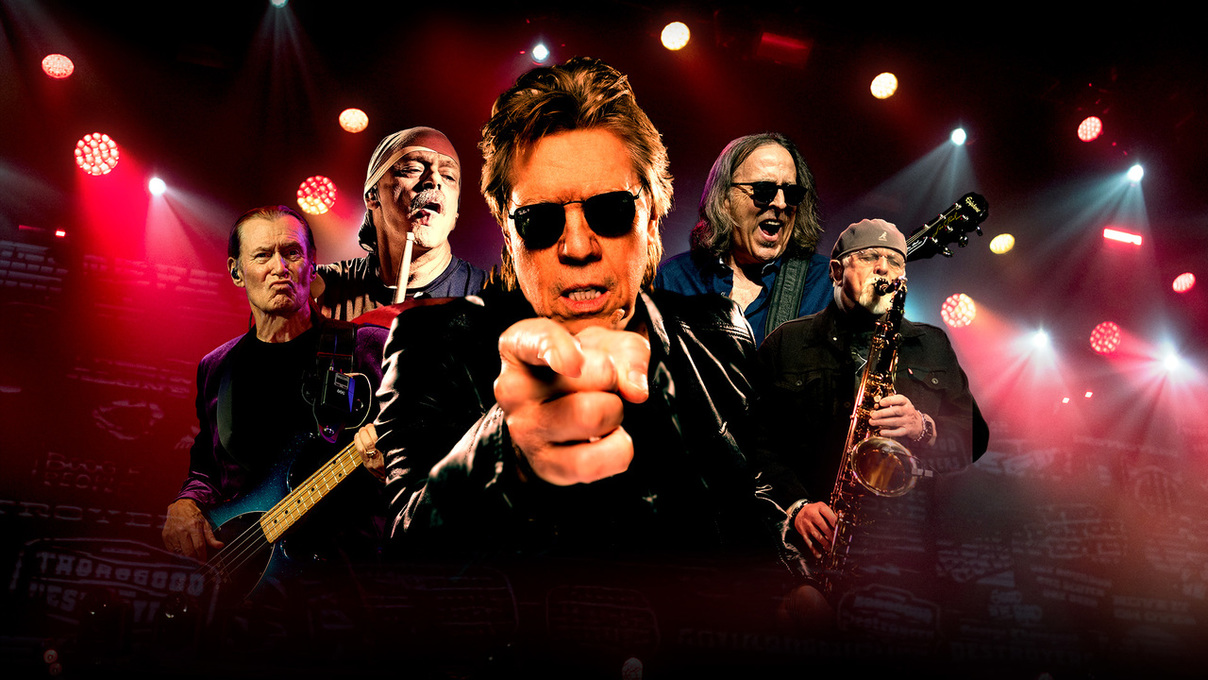
Nashville will tip its hat to one of rock and roll’s most enduring live acts on Tuesday, February 10, when George Thorogood & The Destroyers are honored with a brand-new exhibit at the Musicians Hall of Fame & Museum.
Titled The Baddest Show On Earth, the exhibit celebrates more than five decades of music, road miles, and raw, no-frills rock and roll. The opening night event, billed as the “Riffs To Ribbon” exhibit opening, is open to the public on a first-come, first-served basis.
At the heart of the exhibit is a piece fans have heard for decades but never seen in person: George Thorogood’s legendary 1960s Gibson ES-125TDC, known simply as “Old Red.” Purchased used at Levy’s Pawn Shop in Wilmington, Delaware in 1973, the guitar was played on Bad to the Bone and countless tours. Until now, it has never been displayed publicly.
“The Destroyers and I are truly honored by this exhibit,” Thorogood says. “This is the gear that’s made our music rock for the past 50+ years, and we’re excited to share it all with our fans. Come See What You’ve Heard.”
A Career Built on the Road and On Stage
For Linda Chambers, co-founder and CEO of the Musicians Hall of Fame & Museum, the exhibit reflects something increasingly rare in modern music: longevity built on musicianship and mutual respect.
“Fifty-three years of musicians making music together is a rare and remarkable legacy,” Chambers says. “That longevity is exactly what the museum is about, and we’re excited to share this exhibit with the public.”
That legacy spans more than 8,000 live shows and over 15 million albums sold. George Thorogood & The Destroyers burst onto the scene in the mid-1970s. They have carved out a reputation as one of the most reliable live bands in rock history. They earned Goldmine Magazine’s label as “The All-American rock & roll party band.”
From early club circuits to MTV-era dominance, Thorogood’s snakeskin-and-shades swagger became synonymous with straight-ahead, blues-drenched rock. Songs like One Bourbon, One Scotch, One Beer, Move It On Over, Who Do You Love?, I Drink Alone, Get a Haircut, and Bad to the Bone helped cement the band as cornerstones of classic rock radio and, decades later, streaming playlists worldwide.
Inside the Exhibit: The Tools Behind the Noise
The Baddest Show On Earth exhibit showcases seven artifacts drawn directly from the band members’ personal collections, each telling a piece of the story behind the sound:
• “Old Red” – the 1960s Gibson ES-125TDC played on Bad to the Bone
• A 1974 Shure Vocal Master speaker column from the band’s original PA system
• A 1966 Fender Dual Showman amplifier head used extensively in the 1980s
• A 1979 Checker Taxi roof sign from the band’s legendary 50/50 Tour, all 50 states in 50 consecutive nights
• A custom faux snakeskin jacket worn on the cover of the 1985 Maverick album
• A 1964 Fender Precision Bass, heard on Bad to the Bone and Maverick, and on tour with The Rolling Stones
• A 1976 Slingerland kick drum used on Move It On Over and I’m Wanted
Together, the pieces offer a rare, up-close look at the working gear behind one of rock’s most recognizable live sounds.
Still Turning It Up in 2026
The exhibit arrives as the band continues its Baddest Show On Earth Tour into 2026. For Thorogood, the mission remains unchanged.
“Maybe it’s the healing power of rock & roll,” he says. “But when we hit the stage on any given night, I can guarantee that we’ll make you feel like a teenager again.”
After landmark performances at Live Aid and Saturday Night Live, the band shows no interest in slowing down. They have also toured recently alongside John Fogerty, ZZ Top, and Sammy Hagar.
“When you’ve got the best job in the world, you can’t rest on your laurels,” Thorogood says. “We work hard to bring our best and to keep getting better. That’s the only mission. That’s rock & roll.”
Visiting the Exhibit
Tickets for the February 10 exhibit opening are available now, along with regular museum admission. The Baddest Show On Earth will be on display at the Musicians Hall of Fame & Museum in Nashville. It offers fans a rare opportunity to stand face-to-face with the instruments. These are the artifacts behind more than half a century of American rock and roll.